BuildingBetterDataCenters

A rethink of compute infrastructure, optimised for the environment it sits in, the community around it, and its own economics.

MicroLink
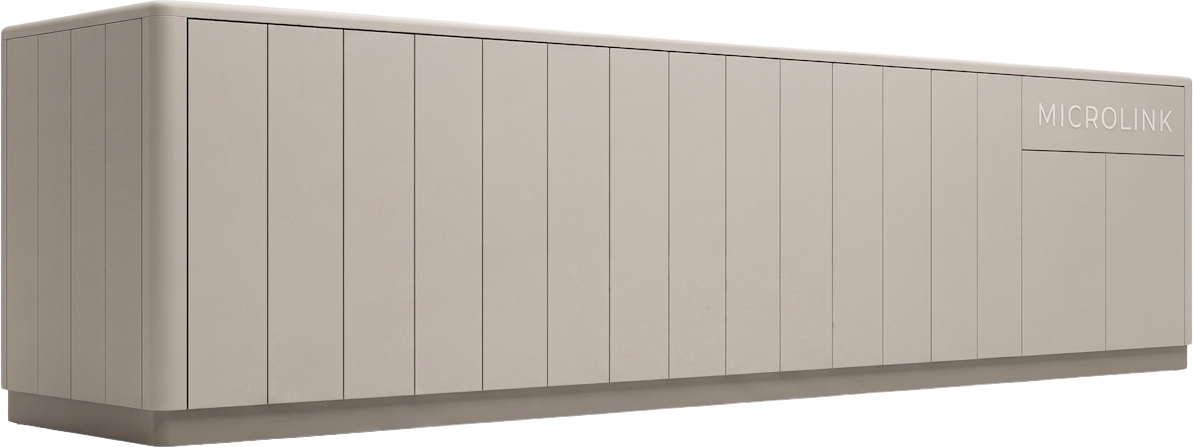
MicroLink pod
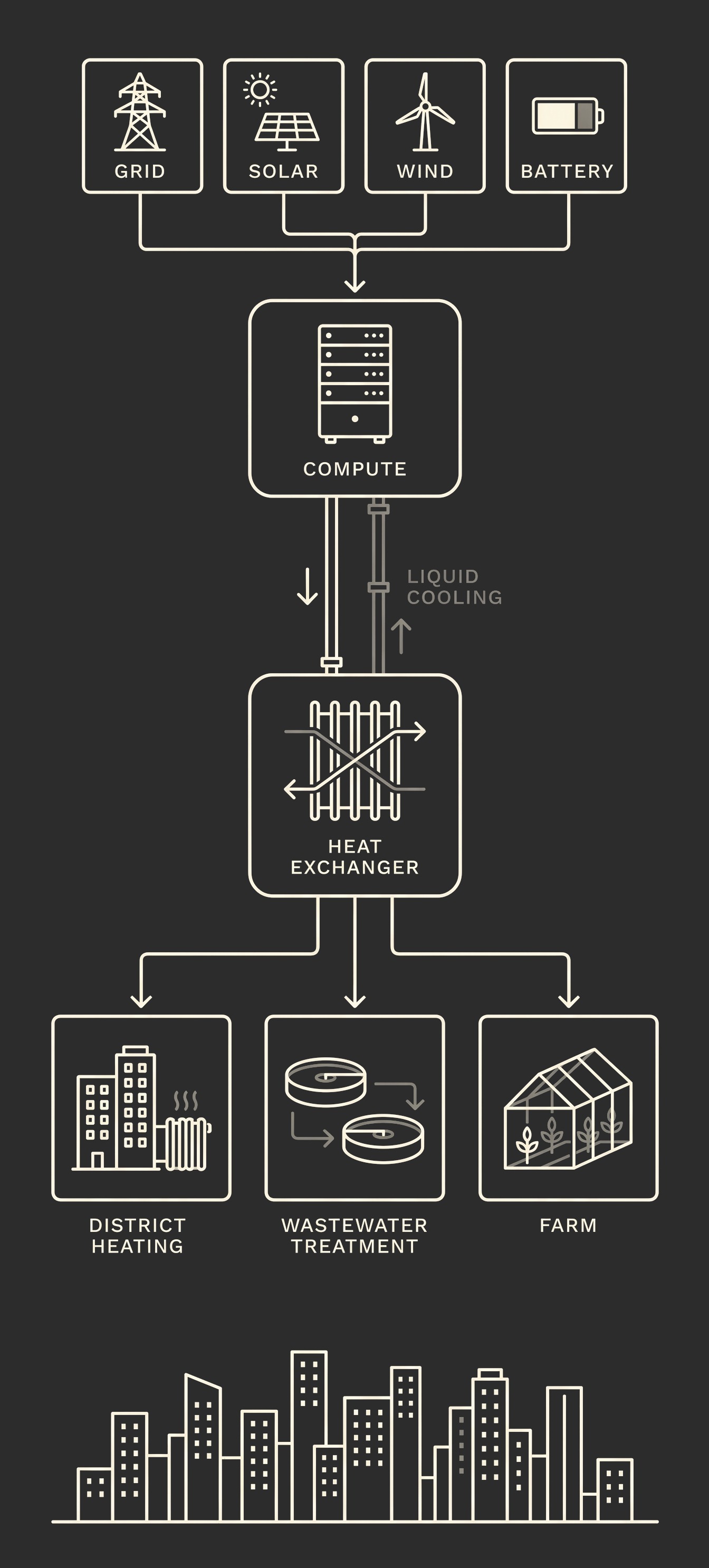
MicroLink energy and heat flow

What MicroLink does

We put the compute where the heat is worth something

MicroLink is the designer, builder, owner and operator of high density compute placed inside existing industrial facilities. We are designers first. We add value to generation instead of competing with it, we upgrade the infrastructure of the places we sit in, and we hand the heat back to the facility around us rather than throwing it away. The tenant gets the capacity. The host gets the heat. The community gets a partner.

Heat recovered:85%Handed to the facility around us instead of the sky
Water use:ClosedClosed loop with a dry cooler path, no evaporative draw
Communities:EngagedConsultation before design, not after permitting

01

Energy

  • We add value to generation rather than competing for it, taking power that is curtailed, stranded or behind the meter and turning it into revenue for the generator
  • We do not raise energy costs for anyone else, because power passes through to the tenant at cost and our load sits inside a facility that is already connected
  • We accelerate the transition to renewables by giving new solar, wind and storage a firm, flexible offtaker from day one
  • We can be interrupted, which makes the load an asset to the grid instead of a burden on it

02

Compute

  • We increase rack density, putting far more compute into the same footprint through direct to chip liquid cooling
  • We are moving to 800 V DC distribution, cutting conversion stages and copper between the point of connection and the rack
  • We build modular, so the module is manufactured in a factory and the work on site is connection rather than construction
  • We deploy in blocks, so capacity tracks demand instead of being built years ahead of it

03

Heat

  • We hand the heat back through a single exchanger that gives the host partner a clean, defined connection
  • A wastewater treatment plant uses it to hold digester temperature through winter, which is the load it burns the most gas to carry
  • A greenhouse or vertical farm uses it to grow through a cold season that would otherwise stop production
  • A district heating network takes it straight into the return leg and stops firing a boiler to make the same water
  • We keep the dry cooler path in the architecture, so the module runs at full load whether or not the sink is taking heat
  • We report ERE alongside PUE, because recovered energy is the number that actually matters

Data centres designed to improve the place they sit in, not just occupy it.

The case

Five numbers that make the difference

01

Heat is a second revenue line

A conventional data centre throws its heat away. Next to a district heating network, that same heat has a buyer who is already paying for it in gas. On 20 MW of IT load, roughly $14M a year against the same capital.

It need not be taken as cash. The value can go back to the host as discounted heat, or be traded for a lower power price, or for grid capacity at a site otherwise years down an interconnection queue.

Cumulative heat revenue from 20 MW of IT load at PUE 1.12 and ERE 0.48, held flat with no escalator applied.

Cumulative heat revenue over a 15 year lease
Water use, closed loop against evaporative cooling

02

The water stays in the loop

Evaporative cooling is what makes a campus a water story in the local press. A closed loop with a dry cooler path removes the argument before it starts, which is the difference between a permit granted and a permit fought.

Measured peak daily water use, Vantage Data Centers Port Washington Wisconsin, closed loop against a comparable evaporative campus.

03

The workload is coming back off cloud

Enterprises are moving AI workloads out of public cloud and into infrastructure they own or co-locate, driven by cost at scale, data sovereignty rules and disaster recovery that cannot sit in one provider.

Illustrative. Share of enterprise AI workloads moving off public cloud into owned and co-located infrastructure over a ten year window.

Enterprise AI workloads moving off public cloud

04

Full stack architecture

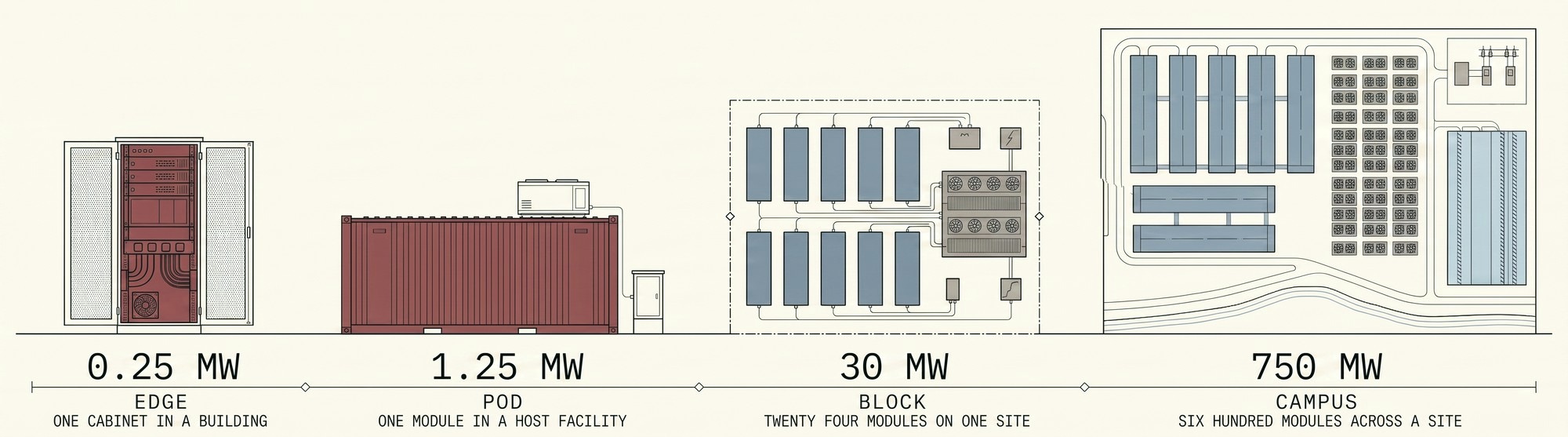
One module, one heat exchanger, one control system, assembled at whatever scale the host facility and the sink can carry. A cabinet in a plant room and a 750 MW campus are the same product counted differently.

Four MicroLink deployment scales

05

Sites in development

Twelve sites in the portfolio, each an existing industrial facility with a heat sink already attached. We are working toward breaking ground on all of them.

  • Grays Ferry, PhiladelphiaDistrict energy20 MW
  • Bethlehem, PennsylvaniaUniversity and utility15 MW
  • Massena, New YorkHydro and industrial60 MW
  • Newtown Creek, BrooklynWastewater15 MW
  • Princeton, New JerseyUniversity10 MW
  • NYSERDA, New YorkPublic programme5 MW
  • Mansfield, OhioCampus development750 MW
  • San Jose, CaliforniaIndustrial host10 MW
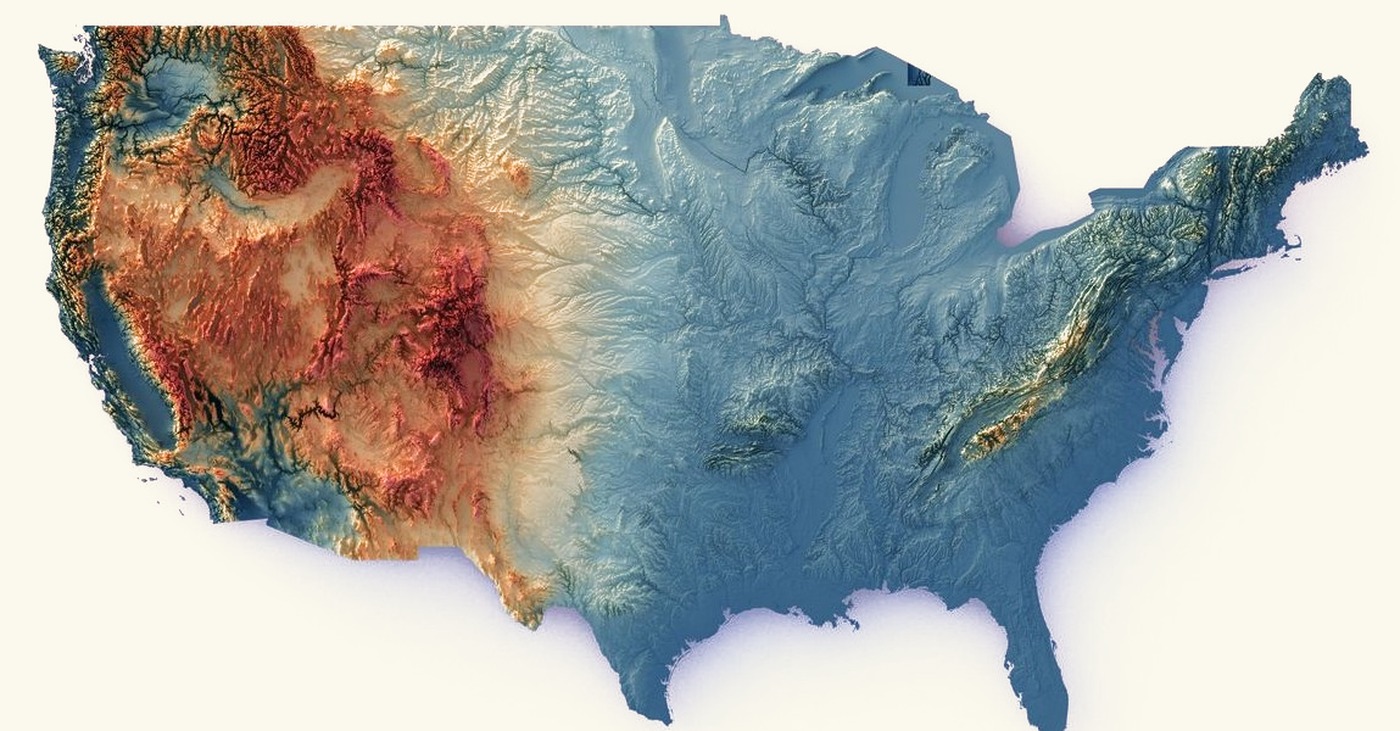
United States site map

Eight of twelve shown. Frankfurt, Tokyo and two further US sites are at an earlier stage. Alongside these, we have continuing discussions on a NYSERDA pilot placing units in K to 12 schools, a global pod rollout across the bottling plants of a major beverage company, and a number of university collaborations.

Talk to our Team

One electron, two jobs

Contact